


At Kanavu Startup Village, web development does not happen in a perfect or corporate-style way. Most projects start with confusion, limited clarity, and basic resources. Ideas change while building, features are added or removed midway, and learning happens along the way. Because of this, the focus is on practical and flexible Web Development Strategies rather than complex plans as followed in real projects shared through the Kanavu Startup Village
How Ideas Actually Begin
Ideas usually start from real problems shared by our founders or clients. Often, the idea is rough and not clearly defined. Teams first try to understand:
- What problem needs to be solved
- Whether a website is the right solution
- What the minimum required features are
Instead of waiting for perfection, work begins early. This helps shape realistic Web Development Strategies from day one.
Planning with Real-World Limitations
Planning is done based on what can realistically be built. The focus is on functionality, not heavy design. Planning usually includes:
- Page structure using HTML
- Basic layouts with CSS
- Simple backend flow using PHP
- Data handling with MySQL
Complex features are postponed. This keeps development practical and aligned with achievable Web Development Strategies.

Full-Stack Web Development in Daily Practice
Web development work follows a simple full-stack approach. The commonly used stack includes:
- HTML for structuring pages
- CSS for layout and responsiveness
- JavaScript for basic interactions
- PHP for server-side logic
- MySQL for storing data
Development happens in small steps. Code is written, tested, changed, and rewritten many times. This trial-and-error approach is a natural part of real Web Development Strategies used at Kanavu Startup Village.
How Client Interaction and Satisfaction Are Handled
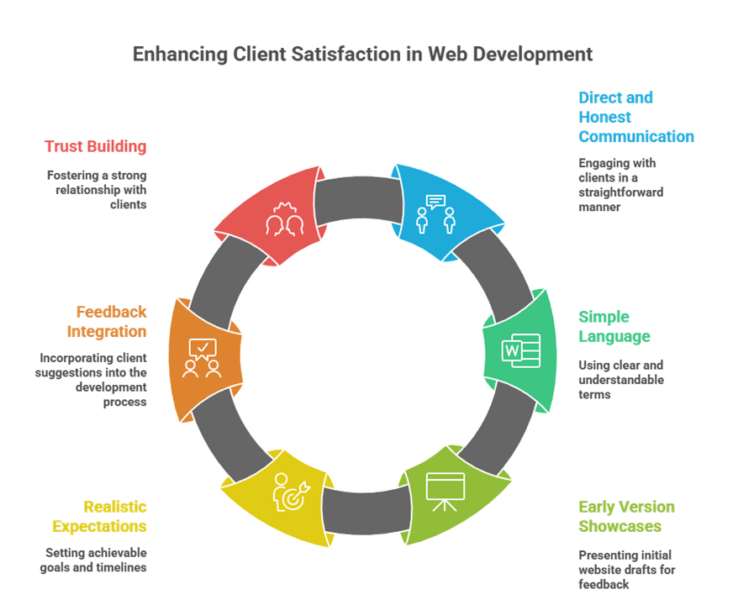
Client interaction is direct and honest. There are no complicated processes. Clients usually explain their needs in simple language, and requirements often change during development. The team:
- Shows early versions of the website
- Explains what is possible and what is not
- Makes changes based on feedback
Instead of promising everything, realistic timelines and features are discussed. Keeping communication clear helps maintain trust and supports effective Web Development Strategies,similar to principles shared in Social Media & Digital Marketing Tips for Local Startups.
Testing, Fixing, and Deploying in Reality
Testing is mostly manual and done by the team itself as part of practical Web Development Strategies This includes:
- Checking forms and database connections
- Testing login and basic security
- Viewing the website on different devices
Websites are usually deployed on shared hosting or simple servers. After deployment, bugs are fixed gradually, and features are improved based on actual usage.